Friday, August 17, 2018

Workshop and Pre-test at Tara Farms


August 16 - Pre-testing at Tara Farms

We made some changes to our methodology just in case there is no WiFi in the areas we visit. At Tara Farms, we made the main house (Zone 0) the reference point for the perimeter of the sampling area (1 hectare). Using a 50 meter measuring tape and some graphing paper, we measured 50 meters (N, S, E, W) from the main house and divided each quadrant into 5x5 meter plots (10x10 plots per quadrant). In the pre-test we tried doing a complete inventory of system components (biotic, abiotic, manmade, etc.) in 4 plots. So far, it took the two enumerators about 20 minutes per plot. In the actual fieldwork, we decided to do a random sampling of ten plots per quadrant.


Also, we tried flying our new DJI Tello--thanks to our GoGetFunding donors!

Thanks to Paulo and Kuya Richard of Tara Farms for letting us practice in their site. We will be back in September!


August 14: Meet our wonderful team at Permaculture Research PH!
Jim Cano - drone operator (Agricultural Systems, UPLB)
Ara Bagunu - enumerator (Microbiology, UPLB)
Cid Mercado - enumerator (Entomology, UPLB)
Brian Sulicipan - documentary filmmaker (Film, UPD)
Seaver Choy - graduate student (Computer Science, DLSU)
Sherry Anne Gocheco - production assistant

Not in video: Jabez Flores - project leader (Environmental Science, UPLB)


August 14Conducted another special permaculture workshop for the second batch of team members, congrats!


Friday, August 10, 2018

Phase 2 Updates

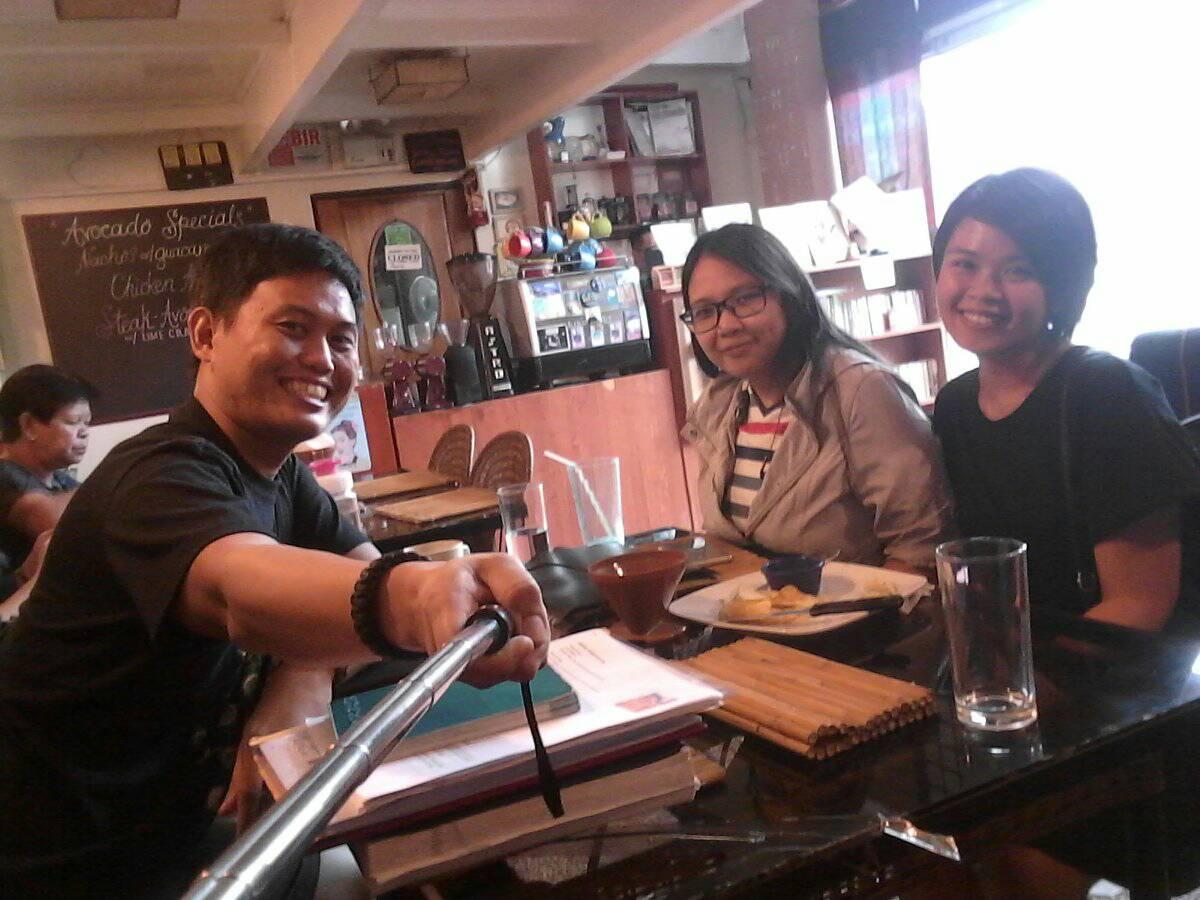
From L-R: Sherry, Seaver, Jabez, Dada, and Brian

This week has been an eventful week for the team.

Last Monday (August 6) we conducted a special permaculture workshop (with emphasis on agroecosystems and food security) for the  team members at Cafe Antonio, Los Banos. We will have another workshop for other team members next Tuesday (August 14). The workshop covered topics such as: the state of the environment, defining agroecosystems, food security parameters, history of permaculture, ethics and principles, and design methods. Lessons from the workshop will help the team with data gathering on the field.


Last Thursday (August 9), the team's field enumerators got together to pre-test the data gathering methodology on a small permaculture garden. They did an inventory of trees, plants, crops, wildlife, man-made structures, technologies, cultural, and socio-economic system components as part of the ecological profiling method. We also went over the questionnaires for our rapid rural appraisal. We realized there's still a lot to improve on our methodology and we're figuring out how to include soil sampling in the process. Next week we will pre-test again in a 3-hectare farm in Bay, Laguna.


Twelve (12) sites have finally confirmed their participation in the research. The original plan was to study twenty (20) sites, but due to time and budget constraints (we only have 2 months for data gathering), we decided to limit the respondents to just twelve. We can probably sneak in a couple in November, especially if it's just in Luzon (i.e. we have contacts in Cavite and Aurora). Maybe after the National Permaculture Convergence in UPLB. Not to worry though, we have plans to continue the research even after the project ends next year. So hopefully, we can get good partners to support our work for years to come. It's not the end!

Our September to October schedule has been set and we're just finalizing trip details such as transportation and food and accommodation. Thank you once again for your cooperation and patience! We would also like to thank our donors from GoGetFunding.com for providing us with a revolving fund we can use for transportation, food, and meetings. We were also able to order some equipment (drone, soil and water pH meters, measuring tape, tripod) using your online and offline donations.


Please subscribe to our YouTube Channel! We have a couple of videos uploaded already. And also please like us on Facebook.

You can also support our crowdfund by creating a support campaign on GoGetFunding.


Thank you!

Sunday, July 29, 2018

Visiting the EcoHouse in Marikina


Yesterday, we visited the Philippine Permaculture Association's (PPA) main office in Marikina. Also known as the "EcoHouse", the 250 square-meter residential lot is the home of permaculture teacher, Bert Peeters, and some of the PPA staff. It was the first time for some team members to see a fully-functioning permaculture design in an urban setting, complete with solar panels, compost toilets, rainwater catchment, a garden, among many other permaculture design components. The team had the opportunity to talk and have lunch with the PPA board and staff. 

We will be back to fully study the site in mid-September. 

Watch the video here:


Monday, July 23, 2018

First Meeting with New Team Members


Today we had our first meeting with our new team members, Dada Mercado (BS Agriculture, '16) and Ara Bagunu (BS Biology, '16). They will serve as field enumerators for the entire duration of the study. Their main task is to survey and document (field notes, photo/video, geotag) system components for each of the 20 participating permaculture sites.

The study sites have yet to be finalized. So far only three have confirmed their participation via e-mail (Tara Farms in Laguna, Alpas Resort in Antique, and Layog Country Farm in Mt. Province).

We will check out study potential study sites in Marikina and Nueva Ecija on July 29-30. Our trip is made possible thanks to your kind donations at GoGetFunding.com.

Sunday, July 22, 2018

Phase 1 Update: Who is Practicing Permaculture?

Who is practicing permaculture in the Philippines? That's our main question for Phase 1 of the research. Online surveys, referrals, Google and Facebook searches, and public database searches have revealed 170 permaculture designers (see graph) in the past 2 months--mostly in Cebu and Metro Manila. Do they really practice permaculture? And if they do, are they having success with their designs? Are they helping the environment? Are they positive influencers in the community? And are they food secure? Those questions are reserved for Phase 2. Our analysis of the Philippine permaculture movement in Phase 1 will reveal where information on permaculture is coming from and who is teaching it. What kind of people are more willing to adapt the practice? Who is willing to make a paradigm shift? And is it possible for permaculture design principles to penetrate mainstream thinking? Follow us on Facebook (facebook.com/permacultureresearchph) and learn more about our research on this website.
#PermacultureResearchPH


Saturday, July 7, 2018

Phase 1 Update

Made this initial Philippine permaculture network map (total of 147 practitioners; including 7 unidentified locations) using the NatGeo Mapmaker.  So far, Cebu has the most number of practitioners with 25 followed by Metro Manila with 16. Still waiting for another database to begin the social network analysis. Also need to purchase GIS software to create the final map. 


Designing the UPOU Campus as a Permaculture Landscape

July 17, 2026 Los Banos, Laguna The Perma GARDEN is growing! Perma Team meeting with Chancellor Serrano to discuss the permaculture design f...